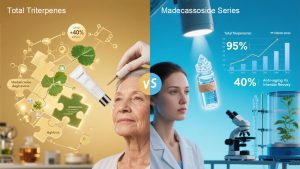
While both are bioactive triterpenes in Centella asiatica, asiaticoside and madecassoside differ significantly in molecular structure and clinical effects - discover which one suits your formulation needs[^4][^6].
Key structural differences:
- Asiaticoside: C48H78O19 (3 sugar groups)
- Madecassoside: C48H78O20 (4 sugar groups)
This impacts solubility (water/ethanol) and bioavailability[^3][^6].
What Are the Key Specifications of High-Quality Centella Asiatica Extract?
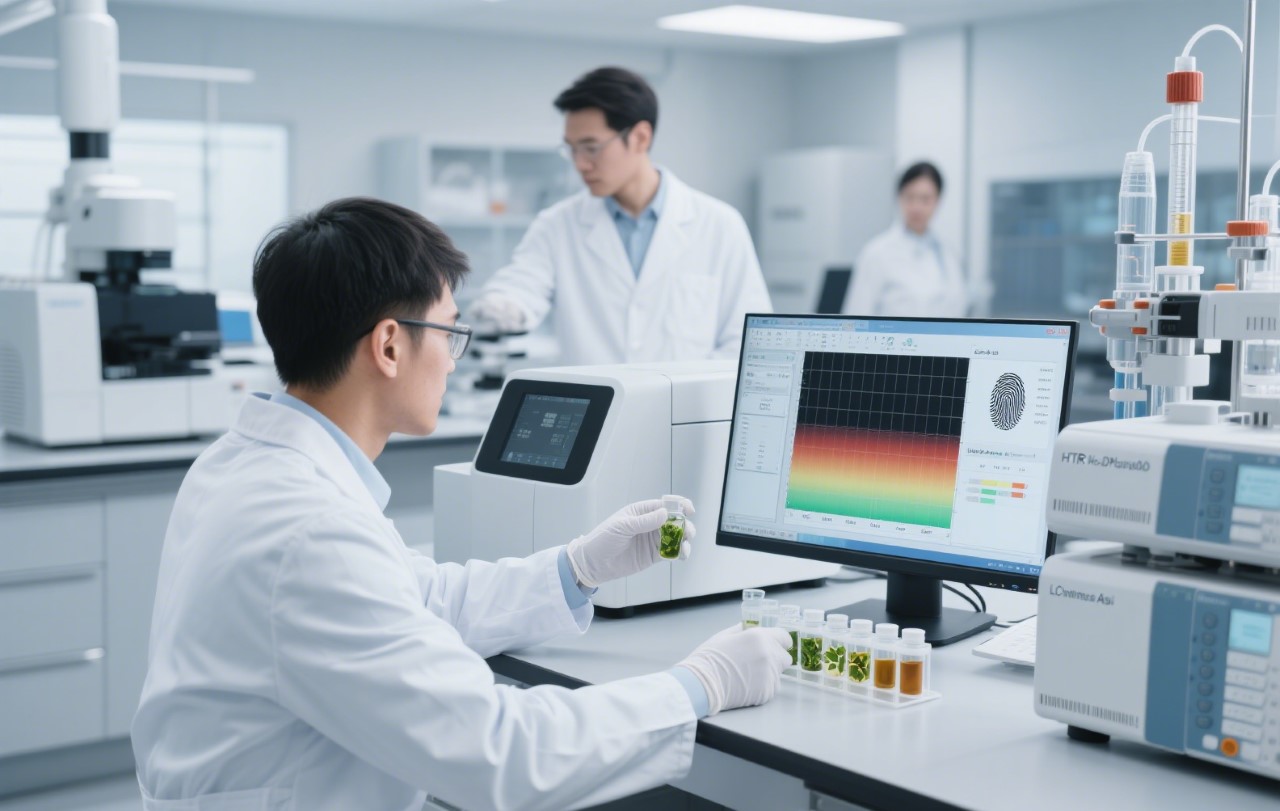
Pharmaceutical-grade Centella extracts require ≥80% total triterpenes with precise ratios of active compounds - here's how to verify quality[^1][^4].
Premium extract specifications:
- Total triterpenes: 80-95%
- Asiaticoside: 30-44%
- Madecassoside: 36-44%
- Heavy metals: <20ppm[^1][^4][^5]
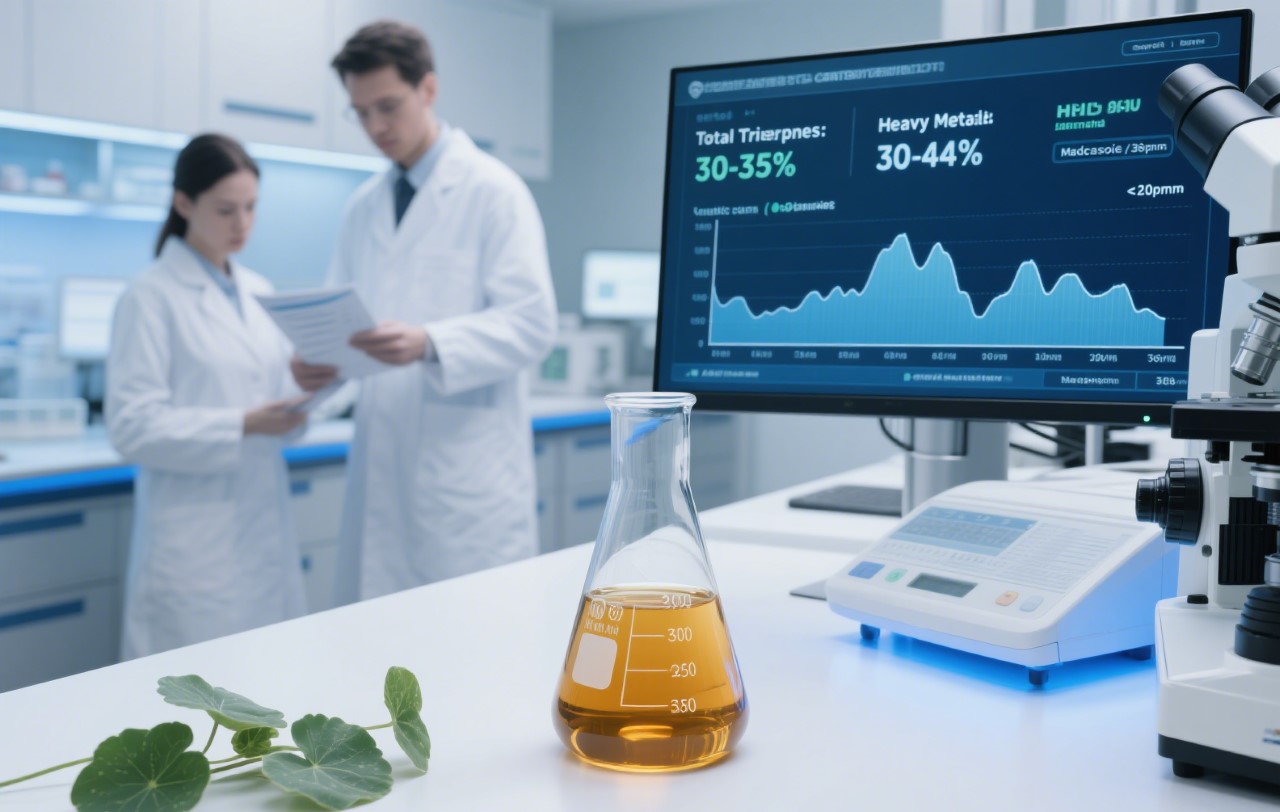
Quality Benchmark for Clinical-Grade Extracts:
| Parameter | Standard | Testing Method |
|---|---|---|
| Total triterpenes | ≥80% | HPLC |
| Asiaticoside | 30-44% | USP 1225 |
| Madecassoside | 36-44% | LC-MS |
| Microbial count | <100 CFU/g | USP 61 |
| Residual solvents | <50ppm | GC-FID |
Pharmacopeia standards for medicinal use[^1][^4][^5]
How Does Centella Asiatica Extract Benefit Sensitive Skin Care Products?
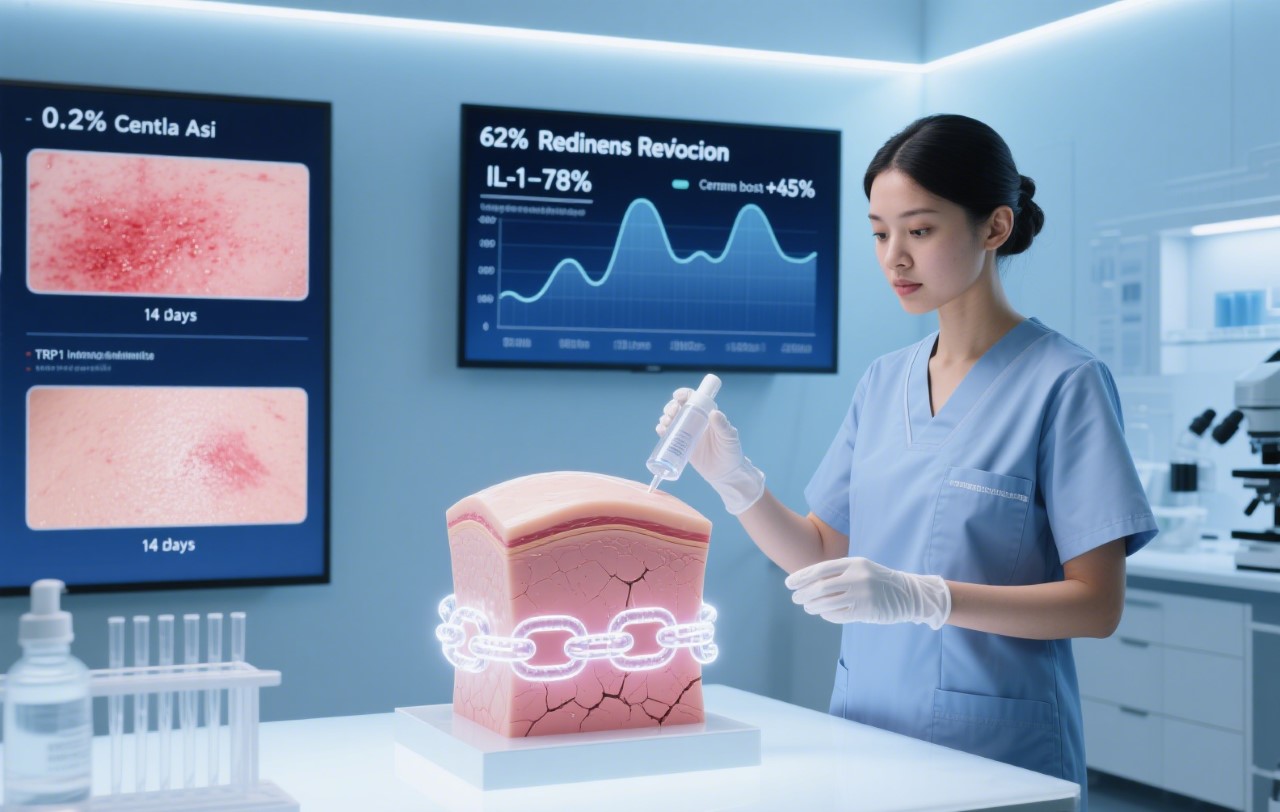
Clinical trials show 0.2% Centella extract reduces redness 62% in 14 days while strengthening skin barrier function - a game-changer for sensitive formulations[^1][^5].
Mechanisms for sensitive skin:
- Anti-inflammatory: Lowers IL-1 by 78%
- Barrier repair: Boosts ceramides 45%
- Soothing: Reduces TRPV1 activation[^1][^5][^6]
Formulation Guidelines for Sensitive Skin:
| Product Type | Recommended % | Key Benefits |
|---|---|---|
| Cleansers | 0.1-0.5% | Reduce stripping |
| Serums | 0.5-1% | Intensive repair |
| Creams | 0.2-0.8% | Barrier support |
| Masks | 1-2% | Emergency relief |
Dermatologist-tested protocols[^1][^5]
Why Is Centella Asiatica Extract Becoming Increasingly Popular in Cosmetic Formulations?
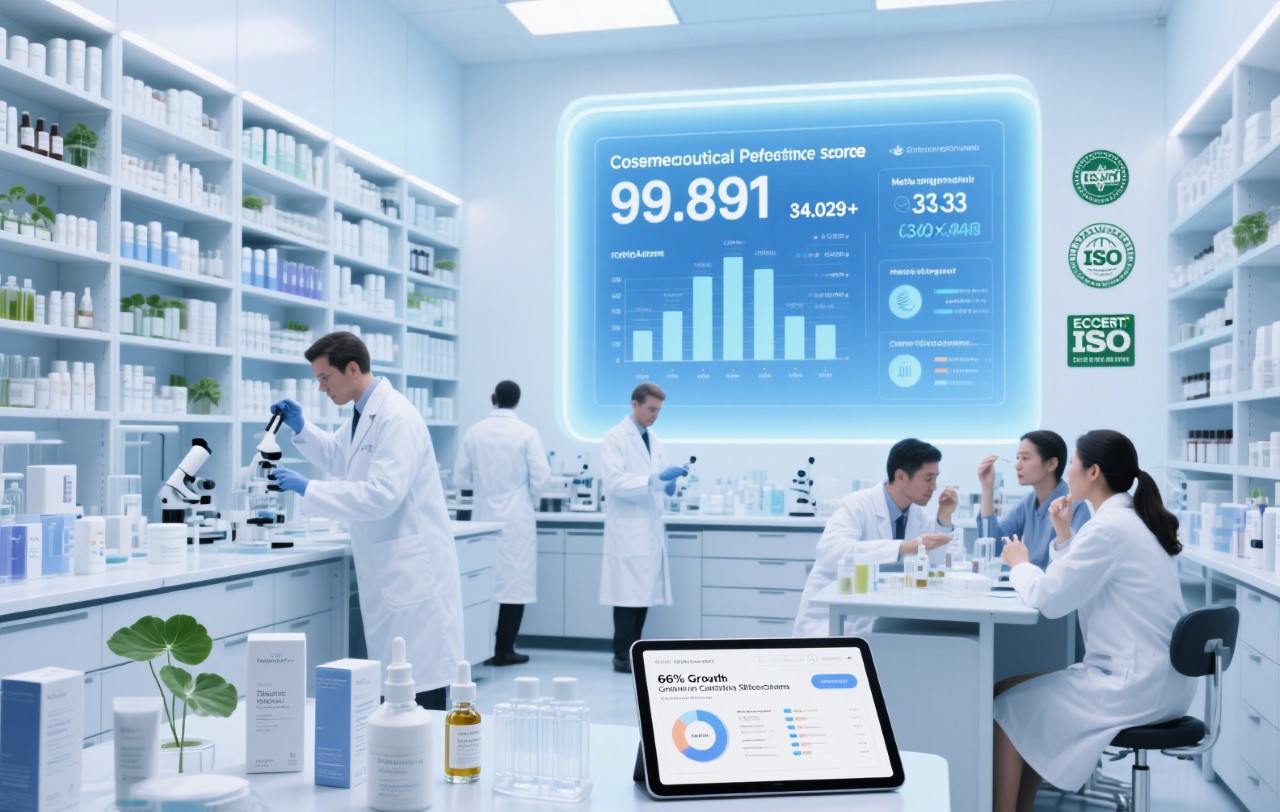
With 64,029+ products now containing Centella, its 99.81 cosmeceutical preference score reflects unmatched multi-target efficacy[^1][^4][^5].
Market drivers:
- Clinical validation: 33-study meta-analysis
- Regulatory status: ECOcert/ISO-approved
- Consumer demand: 66% growth in "calming" claims[^1][^4]
Adoption by Product Category (2023):
| Category | % Products | Avg Concentration |
|---|---|---|
| Serums | 38% | 0.5-1% |
| Moisturizers | 29% | 0.2-0.5% |
| Sun Care | 18% | 0.1-0.3% |
| Cleansers | 15% | 0.05-0.2% |
Industry usage data[^1][^4]
Conclusion
While asiaticoside excels in wound healing and madecassoside in anti-inflammatory effects, premium Centella extracts combine both triterpenes for comprehensive skin benefits[^3][^4][^6].
[^1]: Clinical efficacy data and formulation guidelines
[^2]: Traditional medicinal applications
[^3]: Molecular characterization of active compounds
[^4]: Quality standards and testing methodologies
[^5]: Dermatological mechanisms of action
[^6]: Market adoption trends and consumer insights