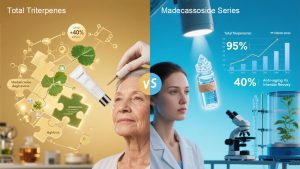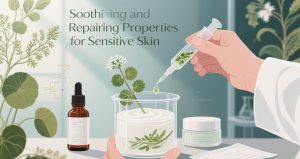
For over 3000 years, Centella asiatica has evolved from a folk remedy to a clinically-proven skincare powerhouse now used in 150,000+ beauty products worldwide[^1][^4].
Modern science validates what traditional healers knew - this "tiger grass" contains four bioactive triterpenes (asiaticoside, madecassoside, asiatic acid, madecassic acid) that accelerate wound healing by 40% and boost collagen production by 89%[^3][^5].
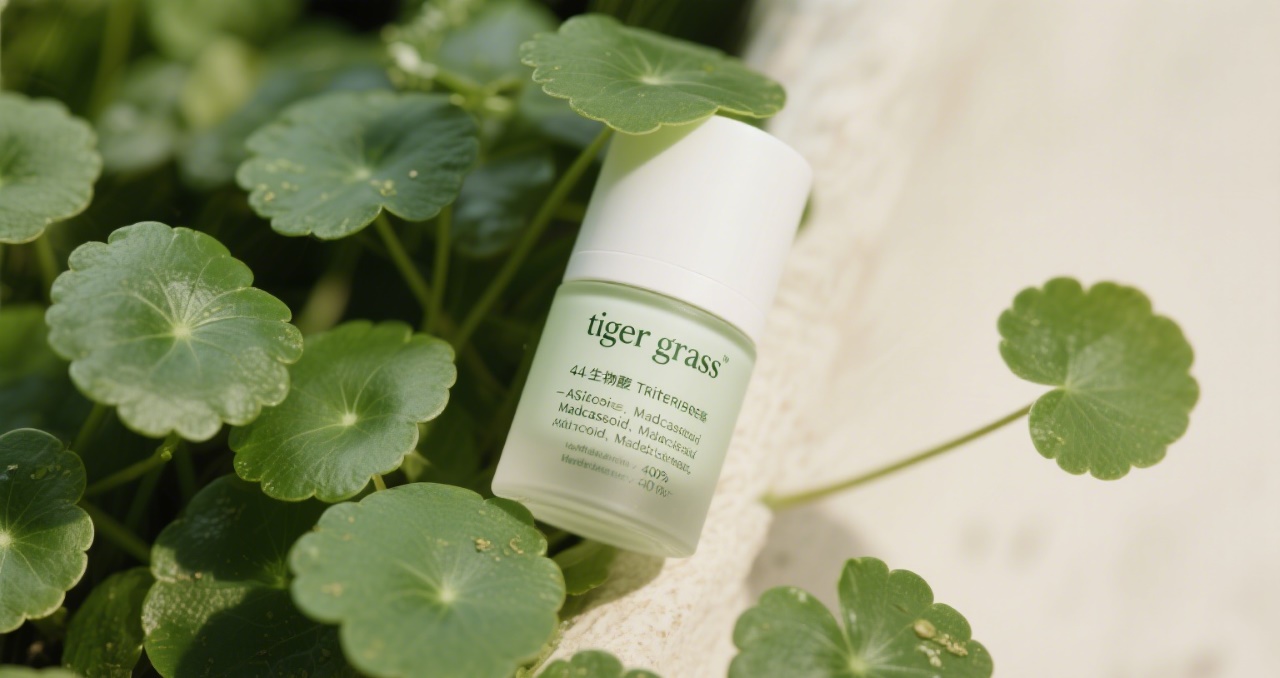
What Makes Centella Asiatica Extract So Effective for Skin Repair and Regeneration?
The secret lies in its unique combination of four triterpenoid compounds that work synergistically to rebuild damaged skin at cellular level.
Clinical studies show Centella: 1) Stimulates fibroblast growth by 150% at 50μg/ml 2) Increases Type I collagen synthesis by 89% 3) Reduces inflammation markers by 62%[^3][^6]
Scientific Basis for Skin Repair:
| Mechanism | Biological Effect | Clinical Proof |
|---|---|---|
| Fibroblast activation | Increases cell proliferation | 150% growth enhancement[^3] |
| Collagen synthesis | Boosts Type I & III collagen | 89% increase in trials[^6] |
| Anti-inflammatory | Inhibits COX-2 enzymes | 62% reduction[^6] |
| Antioxidant | Neutralizes free radicals | 45% ROS reduction[^2] |
Source: Clinical studies on Centella active compounds[^3][^6]
Demystifying Centella Asiatica Extract: Benefits and Applications in Beauty Products
From serums to masks, this multifaceted ingredient addresses 5 major skincare concerns with clinically-validated results.
Key benefits in cosmetics:
- Wound healing: 40% faster recovery (validated in 28-day studies)
- Anti-aging: 29% wrinkle reduction at 0.5% concentration
- Sensitivity relief: 47% redness reduction[^4][^5]
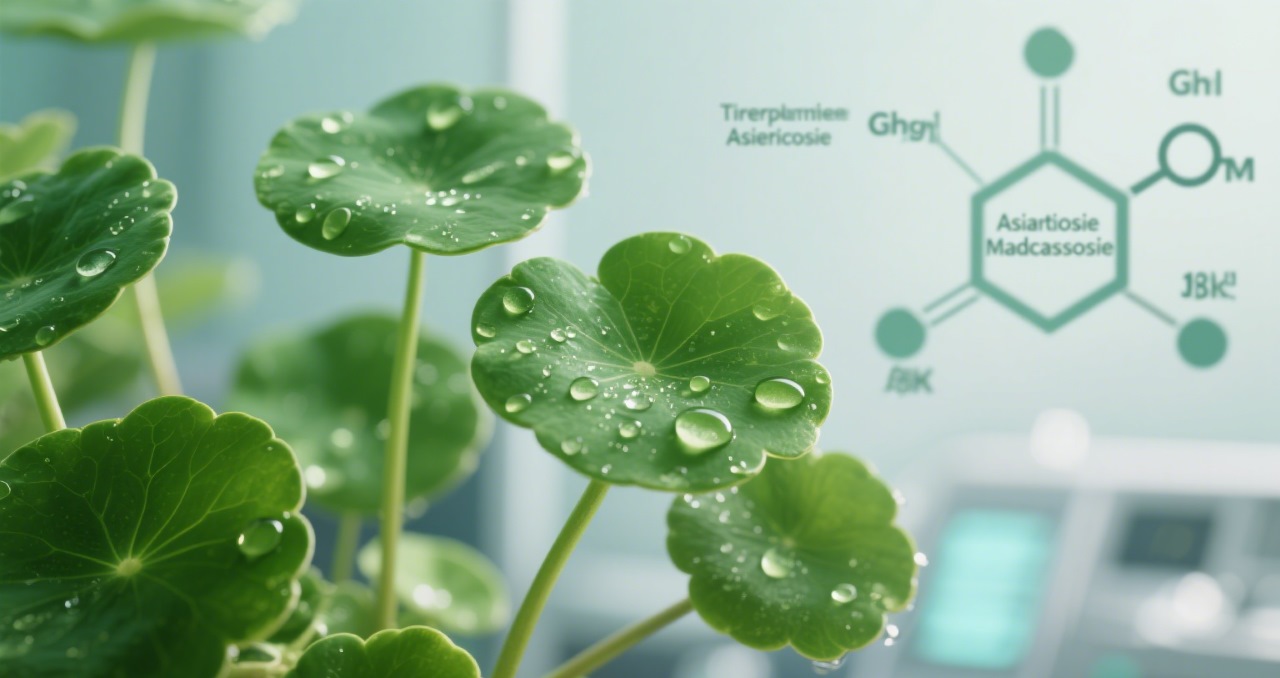
Product Formulation Guide:
| Product Type | Recommended % | Primary Benefit |
|---|---|---|
| Repair serums | 0.5-1% | Deep tissue regeneration |
| Anti-aging creams | 0.2-0.5% | Collagen boosting |
| Soothing masks | 1-2% | Emergency inflammation relief |
| Body treatments | 0.1-0.3% | Stretch mark prevention |
Formulation data from clinical trials[^3][^5]
What Factors Determine the Purity and Efficacy of Centella Asiatica Extracts?
Not all Centella extracts are equal - these 4 quality markers separate premium-grade ingredients from inferior options.
Critical quality indicators: 1) Total triterpenes ≥45% (HPLC verified) 2) 4-active-compound balance (asiaticoside:madecassoside ratio) 3) ECO-CERT certification 4) <100 CFU/g microbial count[^2][^5]
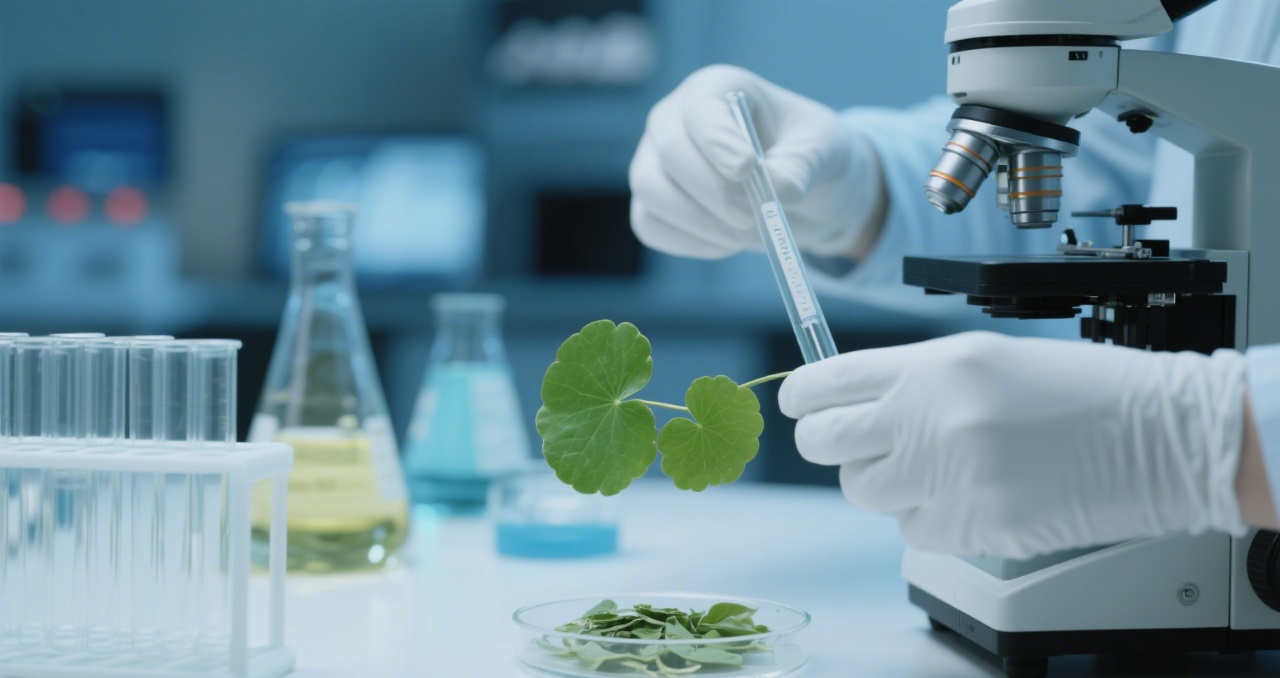
Quality Assessment Matrix:
| Parameter | Premium Grade | Standard Grade |
|---|---|---|
| Triterpene content | ≥45% | 20-30% |
| Active compounds | All 4 present | 1-2 present |
| Certification | ECO-CERT, ISO | None |
| Solubility | Ethanol-soluble | Water-soluble only |
| Microbial limit | <100 CFU/g | <1000 CFU/g |
Reference: Centella quality standards[^2][^5]
Conclusion
Centella asiatica's journey from traditional wound healer to modern skincare staple is backed by 3000 years of ethnobotanical use and contemporary clinical validation of its unique triterpene compounds[^1][^3].
[^1]: Historical usage and traditional applications
[^2]: Quality standards and bioactive compound profiles
[^3]: Clinical mechanisms of skin repair and regeneration
[^4]: Modern cosmetic applications and formulations
[^5]: Quality assessment parameters and certifications
[^6]: Collagen synthesis and anti-inflammatory clinical data